

The pilot trap: why your AI never leaves the lab
Bottom line: Most organizations treat pilot and production as a binary, and because the gap between the two is enormous, they get stuck on the near side — running pilot after pilot that never crosses. The way out is to stop treating production as a single leap and start treating it as a gradient with named stations, each with its own purpose, bar, and exit criterion. A pilot designed only to impress is a pilot with nowhere to go. A pilot designed to graduate is a step. The difference is whether you defined the exit before you entered.
You don't have a model problem. You have a graduation problem.
Walk into an enterprise that has been "doing AI" for two years and you will often find an impressive portfolio of pilots and almost nothing in production. Each pilot worked. Each demo landed. Each steering committee was pleased. And yet the systems that were supposed to change how the business runs are still running in a sandbox, used by no one who wasn't in the room when they were built. The instinct is to diagnose this as a technology problem — the model wasn't good enough, the data wasn't ready. It rarely is. The pilots worked; that was never the issue. What failed is the transition from "it works in a demo" to "it runs the business," and that transition is organizational, not technical.
This is the pilot trap, and it is one of the most common and expensive patterns in enterprise AI. A large share of generative AI projects are abandoned after proof of concept, and a 2025 report from MIT's NANDA initiative found that the large majority of enterprise GenAI pilots delivered no measurable return to the profit-and-loss statement. The reason is not that the pilots were bad. It is that piloting became the destination rather than a step toward one — a comfortable, low-risk, applause-generating activity that an organization can repeat indefinitely without ever taking on the harder work of putting something into production.
A portfolio of successful pilots and nothing in production is not progress. It is the most expensive way an organization can stand still.
Why the binary traps you
The trap is baked into the language. "Pilot" and "production" name two states with a chasm between them, and a chasm invites exactly one strategy: a heroic leap. But the leap is enormous — production demands reliability, integration, monitoring, support, security, and economics that a pilot never had to satisfy — so the leap mostly doesn't happen. The project sits at the edge of the chasm, and because sitting there still produces demos and updates, nobody is forced to admit it has stalled. The binary makes stalling invisible.
Worse, the binary distorts what the pilot optimizes for. If production is a far-off leap, then the pilot's job becomes to be a good pilot — polished, persuasive, stakeholder-pleasing — rather than to be the first step of a journey to production. Teams optimize for the applause at the end of the pilot, which is precisely the wrong target, because a pilot built to impress is built differently from a pilot built to graduate. The features that win a demo are not the features that survive production, and a team chasing the former is actively building away from the latter.
The Production Gradient
The fix is to replace the binary with a gradient: a path from lab to scale with named stations, each a real place with its own purpose and its own exit.
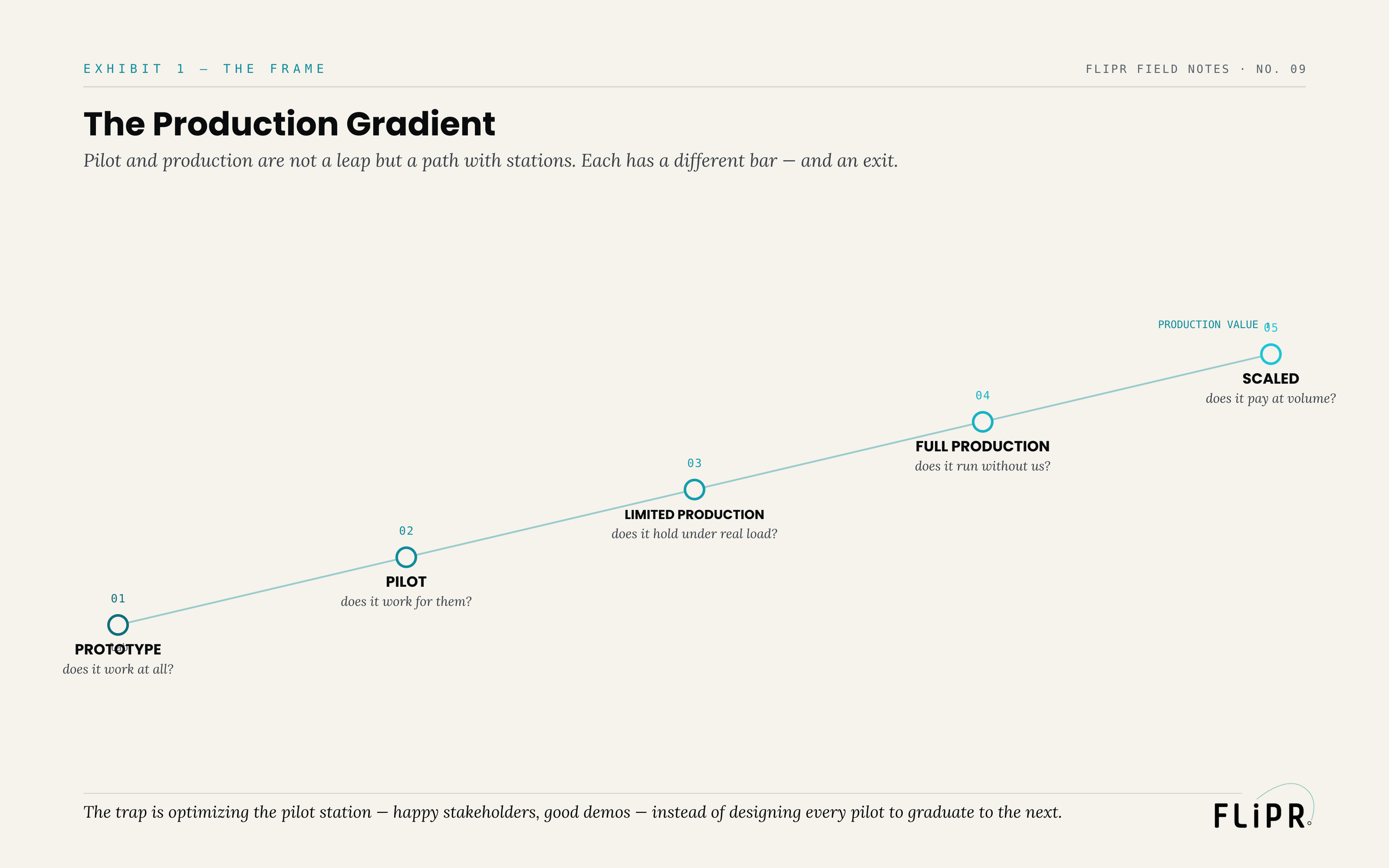 Exhibit 1. Pilot and production are not a leap but a path with stations. Each has a different bar — and an exit.
The stations are prototype, pilot, limited production, full production, and scaled. A prototype proves the idea is technically possible. A pilot proves real users get value. Limited production proves the system survives real load and edge cases. Full production proves it runs without its builders hovering over it. And scaled proves the unit economics work at volume. Each station rises toward production value, and — crucially — each is a distinct stage with a distinct bar, not a vague point on the way to a far-off leap. The chasm becomes a staircase, and a staircase can actually be climbed.
The gradient reframes the whole problem. The question is no longer "have we made the leap to production" — a question so large it paralyzes — but "what station are we at, and what does it take to reach the next one." That is a question a team can answer and act on. And because each station is modest relative to the whole leap, the gradient makes forward motion continuous rather than all-or-nothing.
Production is not a leap across a chasm. It is a staircase — and the reason most teams never climb it is that they keep trying to jump.
What each station is for — and how to exit it
A gradient only works if each station has an exit criterion: a specific, pre-defined condition that says the project is ready to graduate. Without one, a station is not a stage — it is a residence.
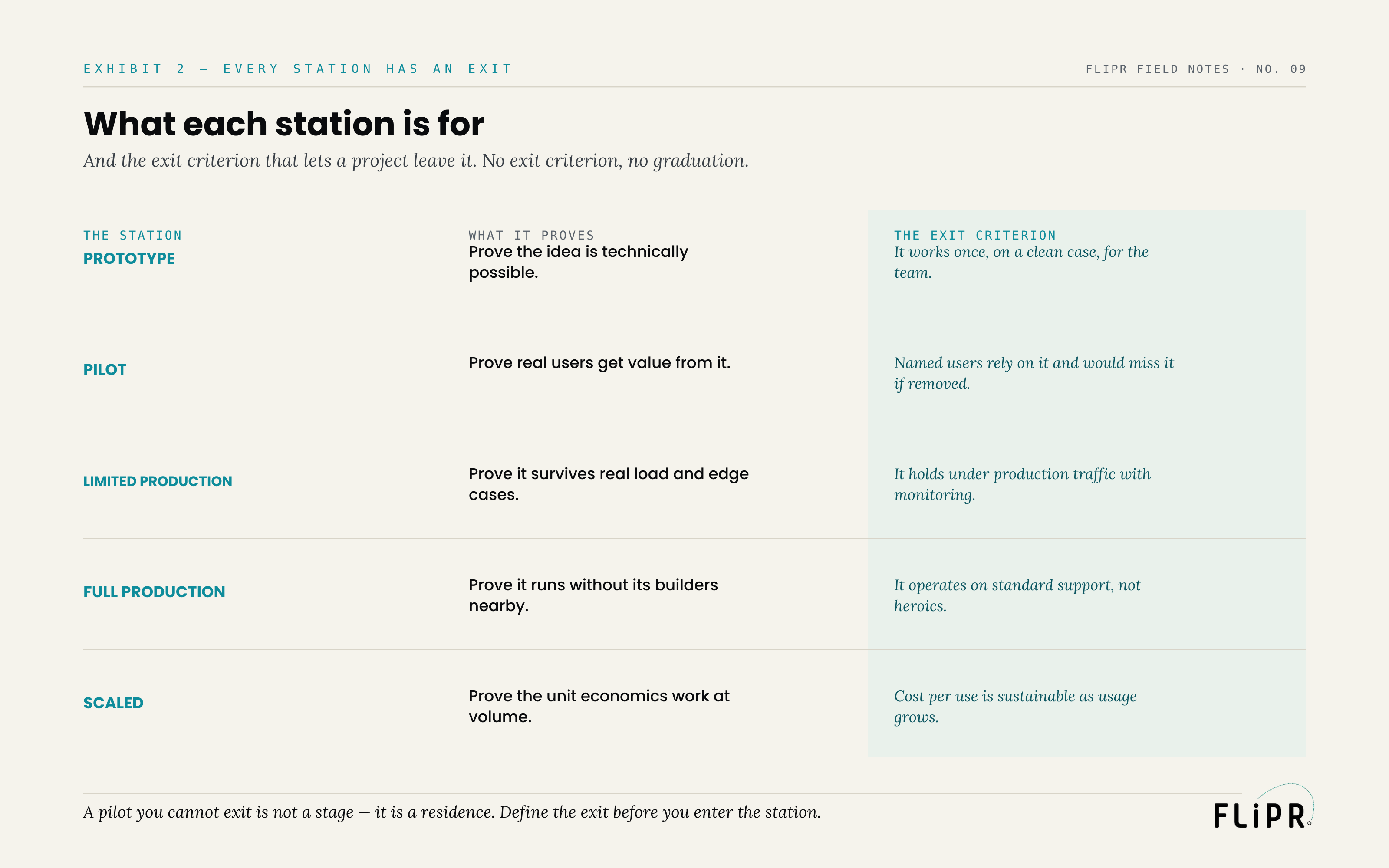 Exhibit 2. No exit criterion, no graduation. Define the exit before you enter the station.
The exit from prototype is that it works once, on a clean case, for the team — enough to justify a real pilot. The exit from pilot is the one teams most often skip: not "the demo went well" but that named users rely on it and would genuinely miss it if it were removed. The exit from limited production is that it holds under real production traffic with monitoring in place. The exit from full production is that it operates on standard support rather than the heroics of its original builders. And the exit from scaled is that cost per use stays sustainable as usage grows. Each criterion is a gate the project must pass to move up, and each is defined before the project enters the station, so that "are we done here" has an answer that isn't a matter of opinion or enthusiasm.
This is the discipline the pilot trap lacks. A trapped pilot has no exit criterion, so it can never be finished and can never graduate — it just runs, generating updates, until interest fades or budget runs out. Define the exit before you enter, and the station becomes a stage you pass through rather than a place you get stuck.
What this looks like on Monday
Set two programs side by side, working on the same idea. (This is an illustration, not an account of any specific engagement.)
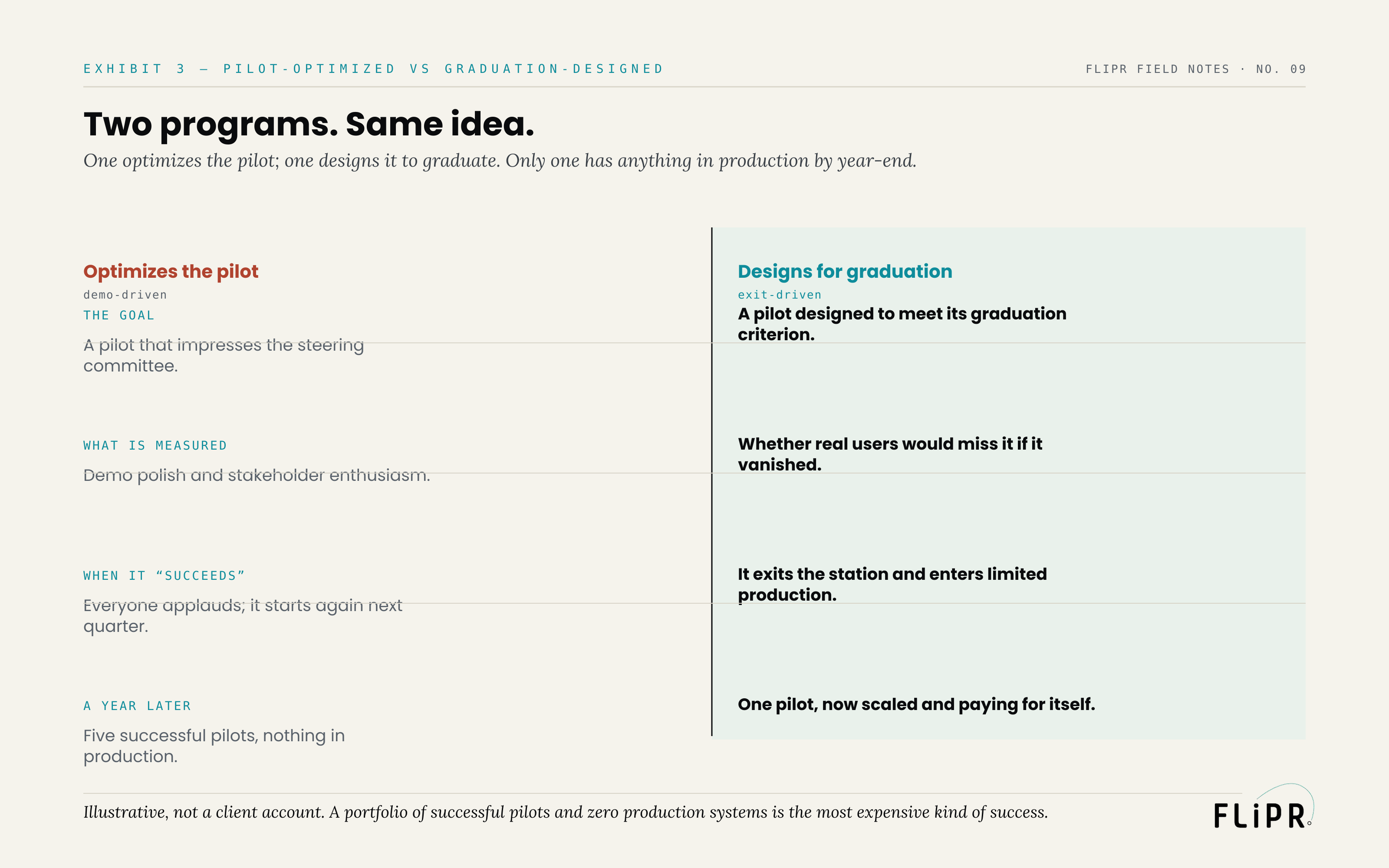 Exhibit 3. One optimizes the station; the other designs the exit. Illustrative, not a client account.
The first program optimizes the pilot. Its goal is a pilot that impresses the steering committee, so it measures demo polish and stakeholder enthusiasm. When the pilot "succeeds," everyone applauds — and then, because nothing was designed to carry it forward, the program starts another pilot next quarter. A year later it has five successful pilots and nothing in production, a track record that looks like activity and amounts to a treadmill.
The second program designs for graduation. Its goal is a pilot that meets a specific exit criterion — real users would miss it if it vanished — so that is what it measures. When the pilot meets that bar, it does not trigger applause and a fresh start; it exits the station and enters limited production. A year later the program has one pilot, now scaled and paying for itself, because every stage was built to carry the work to the next.
Same idea, same starting point. One program optimized the station; the other designed the exit — and only one has anything in production to show for the year.
Where this argument fails, and what it costs
This frame has real limits, and they cut in two directions.
Some ideas should die in the pilot, and the gradient must not become a conveyor that pushes every project to production regardless of merit. The exit criterion cuts both ways: it is equally a kill criterion, and a pilot whose users would not miss it has earned cancellation, not graduation. A gradient used only to advance projects, never to stop them, is just the pilot trap with extra stages. There is also a real risk of over-staging: not every system needs to reach "scaled," and forcing a modest internal tool through five formal stations adds ceremony that the value does not justify — the number of stations should match the stakes. And the gradient is not an excuse for slowness; the point of naming stations is to move through them deliberately and quickly, not to build a bureaucratic checkpoint at each one. A gradient that takes a year per station is its own kind of trap.
That bounds the claim. Use the exit criteria to kill as readily as to promote, match the number of stations to what the system warrants, and move through them fast. The point is not more process; it is replacing an impossible leap with a climbable set of steps.
The decision
Here is the move this points to for your next AI initiative, and it is concrete.
Before the work starts, name the stations it will pass through and write an explicit exit criterion for each one — the specific condition, defined in advance, that says the project is ready to graduate. Make the pilot's exit criterion about real reliance ("named users would miss this") rather than applause, and treat that same criterion as the kill condition: if the pilot cannot meet it, stop, rather than running it forever or starting another. Then manage the project by station — "we are at limited production, here is what reaching full production requires" — instead of by the impossible binary of whether you have made the leap.
The model will rarely be what keeps your AI in the lab. What keeps it there is the absence of a path from pilot to production and the absence of exit criteria to move along it. Replace the chasm with a staircase, define the exit before you enter each station, and use those exits to graduate the projects that earn it and kill the ones that don't. That is how AI leaves the lab — which is, in the end, the organizational counterpart to the delivery gates in the companion piece on why pilots never reach production, and the reason the run-cost curve in the piece on the CFO business case only starts mattering once you actually ship.
Sources
- Gartner. Public projection that the majority of generative AI projects are abandoned after proof of concept. https://www.gartner.com/en/newsroom
- MIT NANDA — The State of AI in Business 2025. Finding that the large majority of enterprise GenAI pilots showed no measurable P&L return.
- McKinsey — The State of AI (annual survey). Organizational and operational barriers as the primary obstacles to moving AI from pilot to production at scale. https://www.mckinsey.com/capabilities/quantumblack/our-insights/the-state-of-ai
- Deloitte — State of Generative AI in the Enterprise (2024–2025). Scaling and production readiness among the recurring challenges enterprises report. https://www2.deloitte.com/
Bottom-line summary (one line)
AI gets stuck in the lab because pilot and production are treated as a binary leap — so replace the chasm with a gradient of named stations, define an exit criterion before entering each one, and use those exits to graduate the projects that earn it and kill the ones that don't.
Suggested LinkedIn hooks (link back to the blog)
- Two years in, many enterprises have a portfolio of successful AI pilots and nothing in production. That's not a model problem. It's a graduation problem — here's the fix. [link]
- A pilot with no exit criterion isn't a step toward production. It's a permanent residence. The trap is optimizing the pilot instead of designing it to graduate. [link]
- Five successful pilots, nothing shipped, is the most expensive kind of success. Stop treating production as a leap across a chasm and start treating it as a staircase. [link]